25.11.2026 · ½–½ · 1–1
Half an hour for one pawn move, then a 20-move draw
How the London took shape
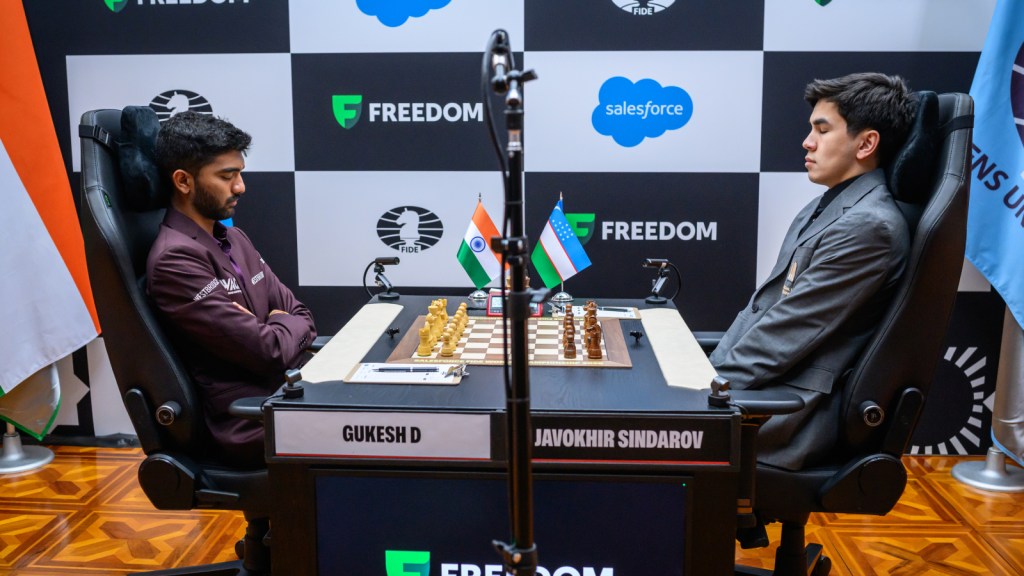
Kazakhstan’s UN representative in Geneva, Erzhan Kazykhan, made the ceremonial first move. The game opened with 1.d4. The ceremonial first move ↗
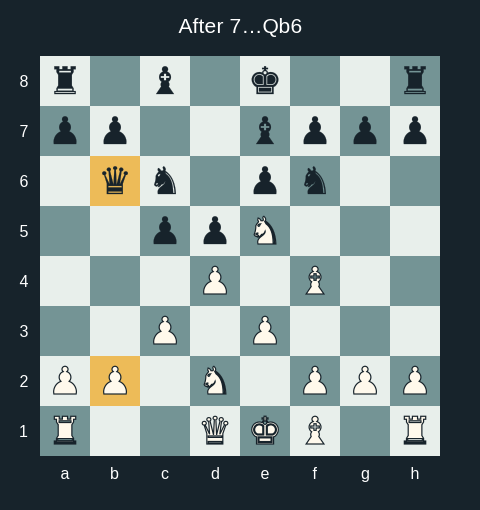
Gukesh had White for the first time in Geneva and chose the London System. Sindarov challenged it early with 3…c5, then sent his queen to b6, where it looked down the file at b2. Gukesh answered with 8.Rb1. After 10.a4, a further push to a5 could attack the queen. By 11…Qd8, the queen was back on its starting square, and 13.Ra1 returned White’s rook to the file of the advanced pawn.
Asked why he chose the London, Gukesh called it a good opening. He said engines had opened up so much to explore for both colours that he did not see one opening as inherently better than another.
Sindarov said he had not expected the London, but had studied the line extensively. He confirmed that the timing of 7…Qb6 was part of his preparation. Watch the Game 2 press conference
Half an hour over e4
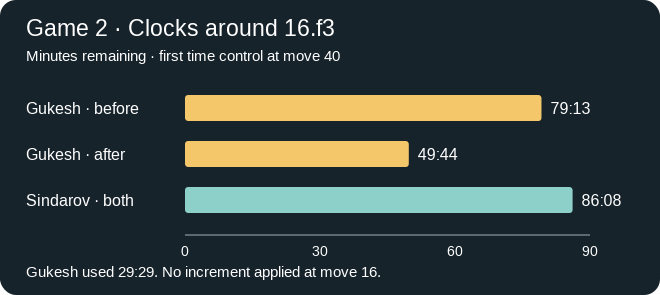
The biggest decision came after 15…f5. Sindarov’s pawn took control of e4 while his rook stood behind the c5-pawn. Gukesh used nearly half an hour before playing 16.f3, contesting e4 with a pawn of his own. That one turn took him from about 79 minutes to just under 50, with 24 moves still to make through move 40.
The position comes full circle
The finish came from two pieces retracing their steps. Whenever Gukesh put his bishop on e5, Sindarov’s …Nd7 attacked it. The bishop went back to g3 and the knight returned to f6. 20…Nf6 brought up the same position for the third time. The game was drawn, the match stayed level at 1–1, and Sindarov has White in Game 3 on Thursday.